

Please select your location and preferred language where available.
Creating AI that Grows Smarter in Real Time: Applying Memory-Centric AI and KIOXIA AiSAQ™ to Object Recognition AI
April 28, 2026
Now that generative AI has become a fundamental part of everyday life, and the use of AI is becoming commonplace in industrial settings, issues with the conventional approach to AI are coming to light. Each time the AI model needs to be retrained to acquire new information, enormous amounts of time and computational resources are required.
“Is there a way to leverage AI even when the conditions are constantly changing?”
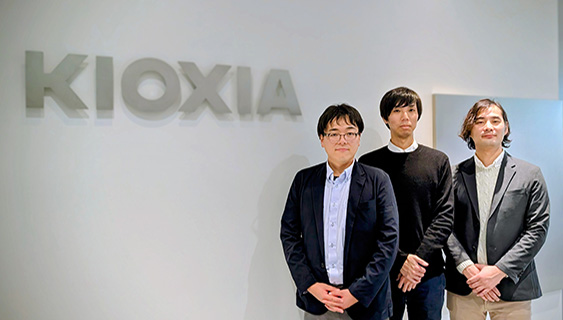
When brainstorming answers to this question, we came up with the idea of using Memory-Centric AI and KIOXIA AiSAQ™, which would allow us to store new information and immediately retrieve and utilize it when needed. It was a young researcher from KIOXIA’s Frontier Technology R&D Institute who proposed incorporating these two technologies into Tsubakimoto Chain’s “AI (pronounced ‘eye’) Temu Kanteishi™ for its material handling (MH) business. He is joined by developers from partner companies Tsubakimoto Chain and EAGLYS to share the story behind this endeavor.
Can you start by sharing what challenges Tsubakimoto Chain faces and the story behind how this collaboration came about?
Matsumura (Tsubakimoto Chain): Our company is engaged in a wide range of business areas, from mechanical components to transportation systems. The material handling equipment I’m involved in requires us to accurately identify in advance what will be placed on the system so that sorting can be carried out. Generally, product barcodes are used, but during scanning, the system may have to locate where the barcode is attached, and in some cases, the code cannot be read smoothly, creating a bottleneck for processing speed.
To address this, we aimed to develop a mechanism that can automatically identify items just by placing them on the system, and have been working with EAGLYS on implementing identification using image recognition. While the technology has reached a certain level of performance, the number of products handled at logistics sites continues to increase. Conventional approaches required gathering training images and retraining the system each time a new product appeared, and the frequency of this process and the operational costs involved became a major issue in practical use. To address this issue, Dr. Maruyama of EAGLYS suggested that Memory-Centric AI capable of handling new items without retraining could be a breakthrough, which is how I came to participate in this project.
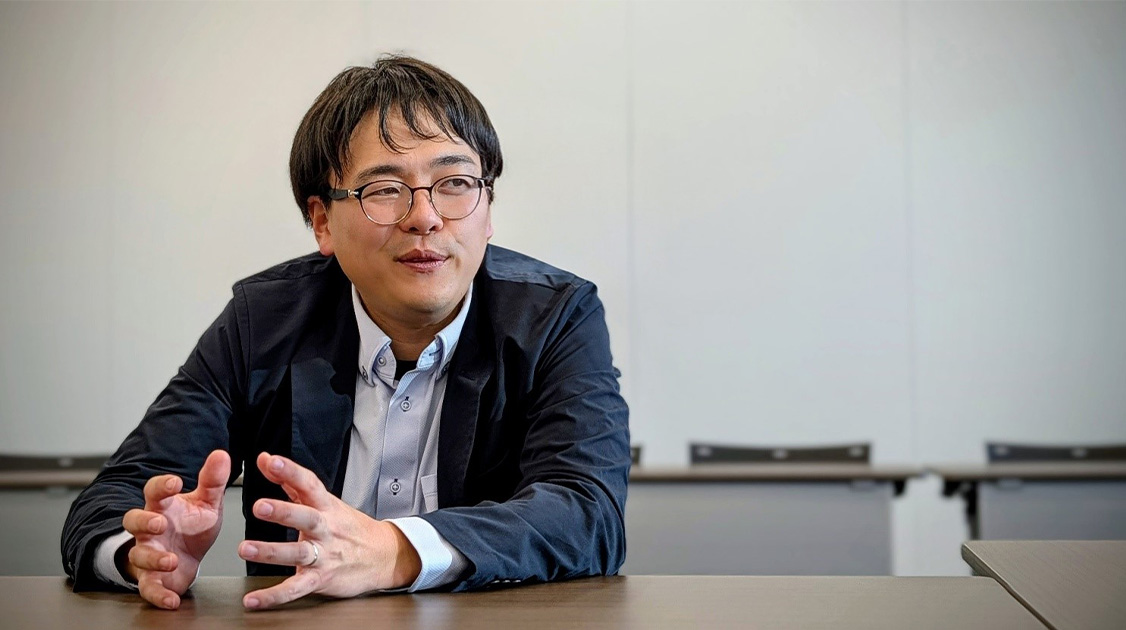
Maruyama (EAGLYS): After reading an article published earlier by KIOXIA about Memory-Centric AI and speaking with the engineers, I thought this might be something we could apply to the work EAGLYS and Tsubakimoto Chain were doing together. This was what led me to bring up the idea. From there, the three companies spent about a year discussing and examining the idea. A moment that I’ll never forget happened on the way back from visiting Tsubakimoto Chain’s plant in Saitama. On the train, Mr. Nakata’s eyes lit up as he discussed the possibility of applying Memory-Centric AI. The passionate way he spoke is etched deeply into my memory.
Nakata (KIOXIA): Although we had developed Memory-Centric AI, we were unable to find practical applications where it could be used to address challenges in society right away. I thought we were still a long way off from finding such an application, so I was surprised when this opportunity presented one.
This question is for Mr. Matsumura and Dr. Maruyama. What are your impressions of KIOXIA?
Matsumura (Tsubakimoto Chain): For this collaboration, we had the opportunity to tour their Yokkaichi Plant. My first impression was how overwhelmingly big the company was (laughs). To be honest, I had never really associated the company with software research and development, so I was surprised. Of course, there are other companies that develop software in order to sell hardware. But with KIOXIA, it became clear to me that focusing on the keyword “memory” would lead to something like this (like Memory-Centric AI).
Something else I noticed was how cheerful the people at Yokkaichi Plant are. I always imagined that precision manufacturing in a clean room meant working alone in silence, but when I actually spoke with them, it turned out to be completely different. People were suggesting things they wanted to try and brainstorming new possibilities, which led to very constructive and lively discussions. I came away impressed at how lively the company was.
Maruyama (EAGLYS): Since I mainly work with research and development staff, my impressions come primarily from people at the R&D institute. Many of the KIOXIA engineers I’ve worked with are extremely passionate about taking on new challenges. Their discussions are grounded in theoretical knowledge, but at the same time, they keep firing off one innovative idea after another. What was very memorable to me was how truly excited they seemed to be when discussing these topics. Also, it may be rude to say this was unexpected, but I felt that many of the engineers were quite stylish and particular about fashion.
Nakata (KIOXIA): A constant stream of new ideas is essential in research and development, particularly when trying to innovate. New value cannot be created if we restrict ourselves to conventional ideas. That’s why it was a really valuable experience for me to be able to engage with people from diverse backgrounds and collaborate with people outside the company. I myself visited Tsubakimoto Chain’s plants several times, and I was impressed by the cheerfulness of the people on site and the team’s unity.
From a technical perspective, what made this challenge so interesting?
Matsumura (Tsubakimoto Chain): The biggest obstacle was that the system needed to accurately identify tens of thousands of products in just hundreds of milliseconds. On top of that, it needed to perform at the same level as the existing system while also being able to handle new products instantly just by adding them to memory. The difficulty here was accuracy. If the system had previously achieved an accuracy rate of 99%, we must be able to maintain that same level of accuracy even after new products were added.
Frankly, reaching 99% is a big challenge for AI. We were aware that maintaining this performance while the number (of items to be identified) continues to grow was ambitious. But it was a line that could not be compromised in actual operations, and I believe our role in this collaboration was to clearly demonstrate this standard mark the goal line. It was very important for the development team to understand that this is the level of quality that customers seek.
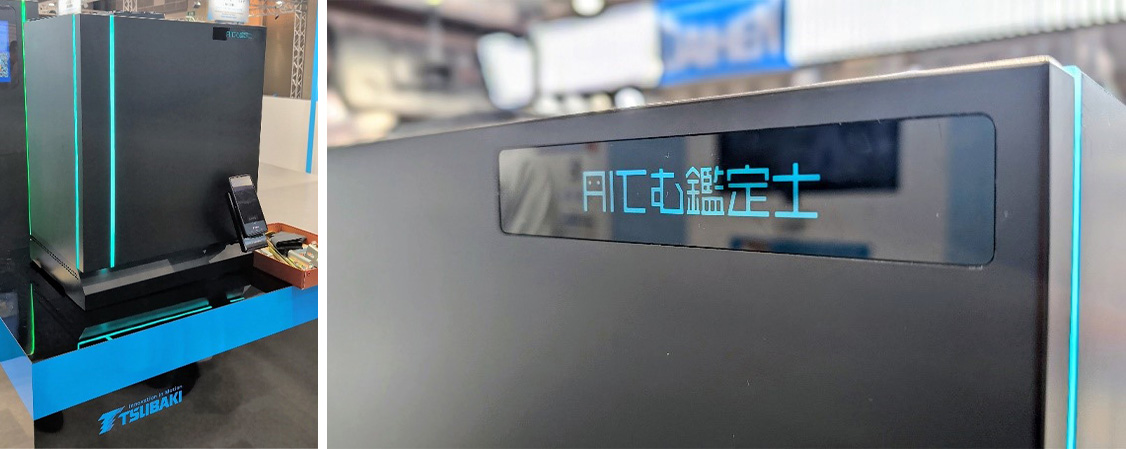
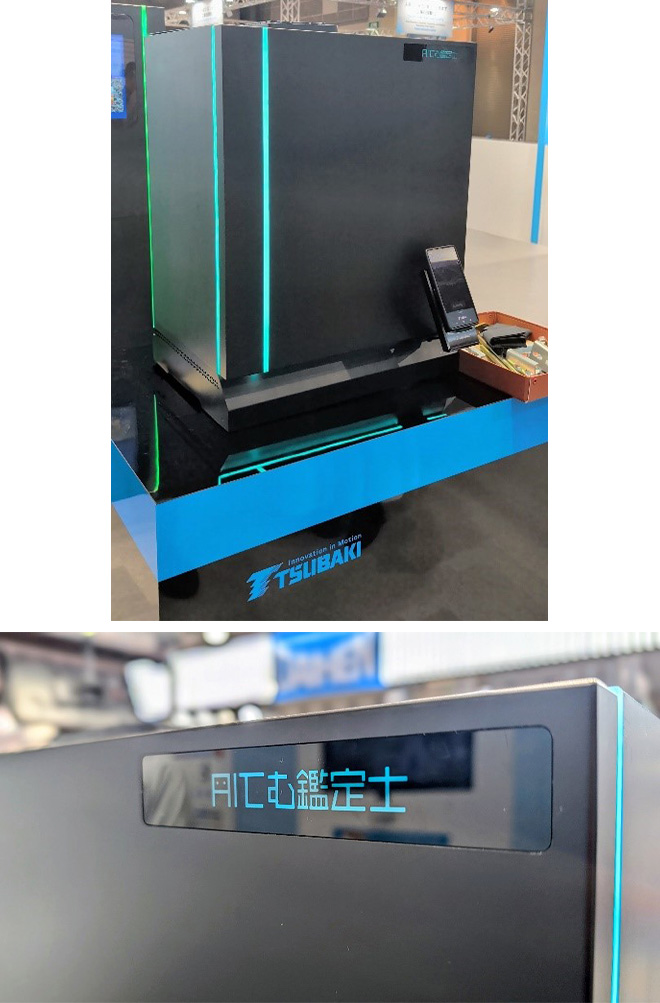
Maruyama (EAGLYS): The most difficult aspect of this project was balancing AI Temu Kanteishi™ with Memory-Centric AI. There were a number of different approaches to implementation, and we built the system through trial and error using various patterns. Our methods weren’t conventional. Even now, we’re still dealing with a few issues, so I feel this was the most difficult challenge within the whole project. Also, there were differences in the cultures and ways of thinking of KIOXIA, which is engaged in the semiconductor business, and Tsubakimoto Chain, which is engaged in solutions in the logistics industry, putting them closer to the end users. As the initiator of the project, it was challenging to consolidate and steer the direction of the R&D efforts.
Nakata (KIOXIA): What I found genuinely interesting as an engineer was that the image recognition technology used for semiconductor wafer defect inspections at the Yokkaichi Plant is designed for conditions that are completely different from those of the image recognition technology that we wanted to apply in this project. Defect inspections use expensive, high-resolution cameras, and the task is to classify defect types based on subtle visual differences, even though the types of defects themselves are limited.
By contrast, the cameras used in this project are of standard specifications, but the number of target products is vastly larger, reaching tens of thousands of types. However, each product package itself is a mass-produced product, and there are almost no individual differences in appearance. In light of this, we hypothesized that, instead of learning visual differences and extracting features, a more practical approach might be to directly memorize and compare the product types, even if their numbers are in the tens of thousands, essentially identifying them by matching them against a large body of known data.
We were reminded that the strengths of Memory-Centric AI are actually best leveraged in cases like this, where there are many product types. Furthermore, at logistics sites, products are often replaced due to promotional campaigns and seasonal products. It's not worth the operational cost to retrain the AI each time this happens, but Memory-Centric AI enables us to add what we need and delete it when we don’t need it anymore. That was the biggest challenge of this project, but it was also the moment that convinced me that this is precisely where the true value of Memory-Centric AI lies.
Maruyama (EAGLYS): Our biggest achievement was that the accuracy could mostly be maintained even when new products were added one after another. Until now, the system had to be retrained whenever a new product appeared, costing several hundred thousand yen each time. With new products being added about once every three days, we felt that the operation was reaching its limits. But now, new products can be added without having to retrain the system, with almost no drop in accuracy. Of course, if you add a lot of products, you'll see a slight drop, but the frequency of retraining has dropped dramatically. The result is less model retraining, lower running costs, and lower energy consumption. I think that's a huge achievement.
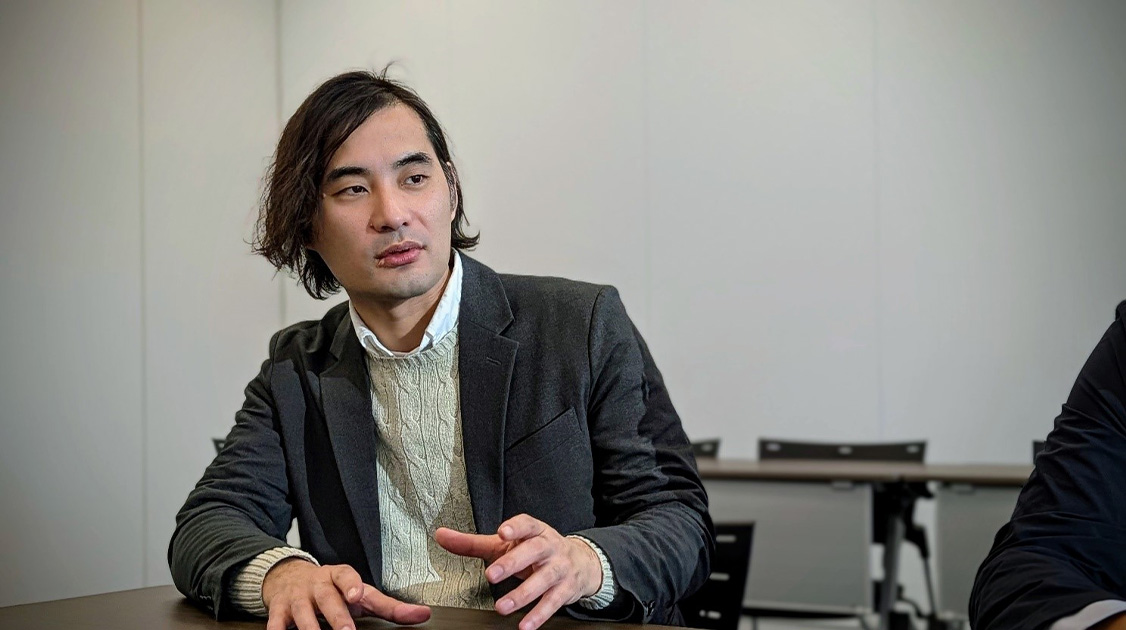
Matsumura (Tsubakimoto Chain): This technology is sure to improve the level of service. What is more valuable, however, is that it solves problems rooted in actual logistics operations. No matter how highly accurate an identification technology is, it cannot solve problems in actual operations alone. This is because each newly added product brought the heavy operational burden of collecting data and retraining the system. We feel that the value lies in having eliminated the biggest bottleneck and established a solution that works in the real world, rather than a pie-in-the-sky idea.
Highlights of Collaboration Between the Three Companies
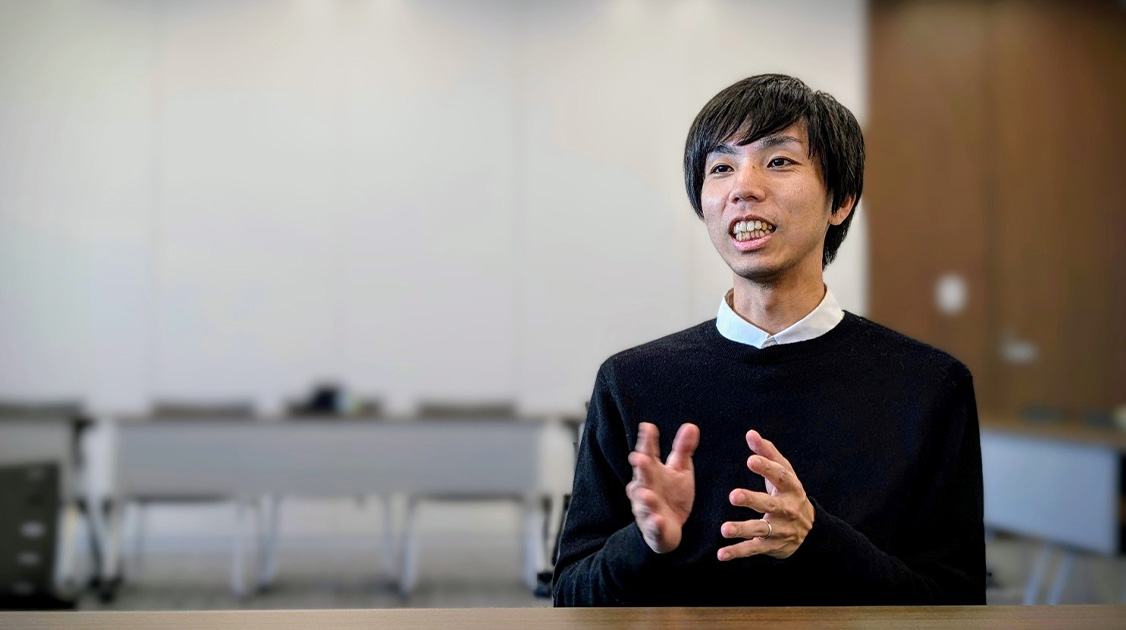
Matsumura (Tsubakimoto Chain): The best thing about this joint development project is that it has strengthened our relationships with our partners. During the development process, there were times when things didn't go well, as well as times when we had conflicting opinions. But by working together to figure out how to overcome these challenges and addressing them without compromising our standards, a relationship of trust began to naturally form. This kind of relationship inspires discussions that go beyond the technical topics related to this project, allowing us to examine new possibilities that lead to the next stage. As developers, it is important to continue exploring where our technology can be applied, and the opportunity to share the diverse perspectives of the three companies was very rewarding.
Maruyama (EAGLYS): As the one who initiated the project, I feel quite relieved now, to be honest. I feel that this initiative has allowed our relationships and discussions to gradually expand through continued dialogue around common topics. While working on development, I realized time and time again that it’s not just the technology, but also the exchanges between people and the sharing of perspectives that will take us to the next stage.
Nakata (KIOXIA): This project drove home the fact that if we were developing the technology on our own, our perspectives and ideas would be inevitably constrained. Development was carried out through face-to-face discussions with engineers from companies with different cultures and specializations. It was a valuable experience for me to be able to think about things from a completely new angle. There were some moments where we had serious conflicts of opinion. However, I feel that moments like these were what led to our participation in the exhibition and the subsequent expansion of discussions.
Our company excels in the development of semiconductor storage, but on our own, we cannot cover how semiconductor storage is actually used in the logistics industry or the design of services that directly address social issues. By combining Tsubakimoto Chain's hardware and operational knowledge and EAGLYS's AI software with KIOXIA AiSAQ™, we began to see the potential to expand our technology into areas that we could not reach by ourselves, which was very meaningful.
What kinds of new applications might emerge in the future?
Matsumura (Tsubakimoto Chain): In the logistics industry, we transport a wide range of items in addition to daily necessities, including components, vegetables, semiconductors, automobiles, and even things like biological cells. I see great potential in this initiative as a technology that will lead to the next stage of identification and sorting.
Maruyama (EAGLYS): In the context of memory retrieval, the technology is also used in some foundational technologies behind LLMs (Large Language Models) and in fields such as facial recognition. However, there are not many examples of implementing the idea of using Memory-Centric AI for object recognition as we did in this project. I believe that the results of our project have expanded the possibilities for Memory-Centric AI.
Nakata (KIOXIA): In addition to technologies like this Memory-Centric AI and KIOXIA AiSAQ™, I think it would be exciting if we could continue to work extensively with various companies to address problems rooted in society by applying the research and development of new technologies and the potential of these technologies.
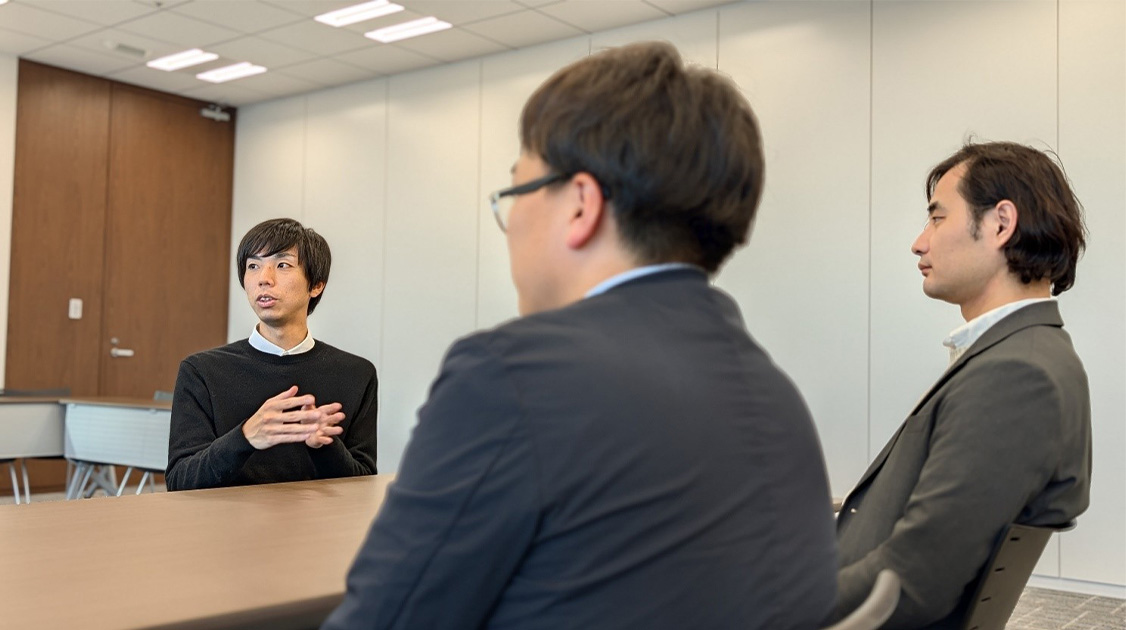
Please share with us your dreams as developers.
Matsumura (Tsubakimoto Chain): We at Tsubakimoto Chain are dedicated to moving things. But simply moving things from one place to another is not exciting. The desire to add value in some way, such as by sorting things while moving them, has always been rooted in our company.
This image recognition technology is one example of this, and we took on the endeavor believing that there must be a smarter way to move things. Currently, we use images to identify product types, but in the future, we may be able to assess the safety and freshness of food products, and even the conditions of what’s inside, like the flavor. If it becomes possible to assess the conditions of products beyond simply sorting items, new value will be generated in logistics. If we continue to refine our identification technology, we will be able to identify things that we never thought were possible. Just to push the idea a bit further, wouldn’t it be exciting if you could, for example, make fish taste better by applying vibrations while it’s moving along a conveyor? It would be a dream come true if logistics could achieve something almost magical, like making fish taste even better than when they were caught by the time they reach people’s homes.
Maruyama (EAGLYS): For example, if a robot were cooking and mistakenly added something like detergent, the consequences would be irreversible. This is why we need a way to correctly identify the objects in front of us. Correctly identifying objects was precisely the theme of this project. The first application is in logistics sorting, but as we expand this technology, it will become essential in a world where people and robots live together and work on the same tasks. I hope this initiative will serve as a foundation for such a future. That's my dream.
Nakata (KIOXIA): Well, let me see. I hope that the technology I’ve helped develop will be used to solve challenges in society, turning both your dreams into reality. That’s why I want to develop living technologies through collaboration and bring them into practical use in society. That’s my dream.
This question is for Mr. Matsumura and Dr. Maruyama. What are your expectations for KIOXIA?
Matsumura (Tsubakimoto Chain): In the years ahead, I think that the ability to work with data at higher resolutions will generate a completely new level of value compared with today. I want to be able to use data lavishly to my heart’s content, without needing to worry about costs. We know there are technical limitations, but what we want to see is a kind of dream infrastructure that allows us to accumulate massive amounts of data and pull it up when we need it while keeping costs down. This will allow us to push sensing resolution to the limits and handle large volumes of data over extended periods of time, enabling approaches that were not possible before. In fact, the amount of data has already reached the petabyte level. From an operational perspective, I sincerely hope to see a dramatic reduction in storage costs. I have high hopes for KIOXIA’s innovations.
Maruyama (EAGLYS): I'm looking forward to limitless SSDs and a new business model built on them. With a sustainable environment where we don’t have to worry about capacity or service life, we can use a lot of data with AI, and all of the data we currently throw away can be kept as assets. The range of applications will expand rapidly, including encryption. If you have an infinite amount of infrastructure in place, you can experiment on it. I believe that unexpected innovations may emerge from this. This kind of environment is crucial for data to truly create value. It would be a very creative and interesting experience to look at past and present data like a time-lapse, and to cut and mix just what you need. Data can create diverse forms of value depending on how it is collected. But no one knows when that value will be created. That’s why ideally, we want to have infrastructure that has no capacity limitations and can continue to retain data.
In the future, I think that data will be generated for areas that are closely linked to the human experience, such as taste and smell. If that were to happen, recipes, for example, would evolve beyond text information to become more concrete. I would like to see KIOXIA develop infrastructure that would support ambitious applications like storing the taste of dishes from renowned restaurants and family recipes in memory in the form of complete data.
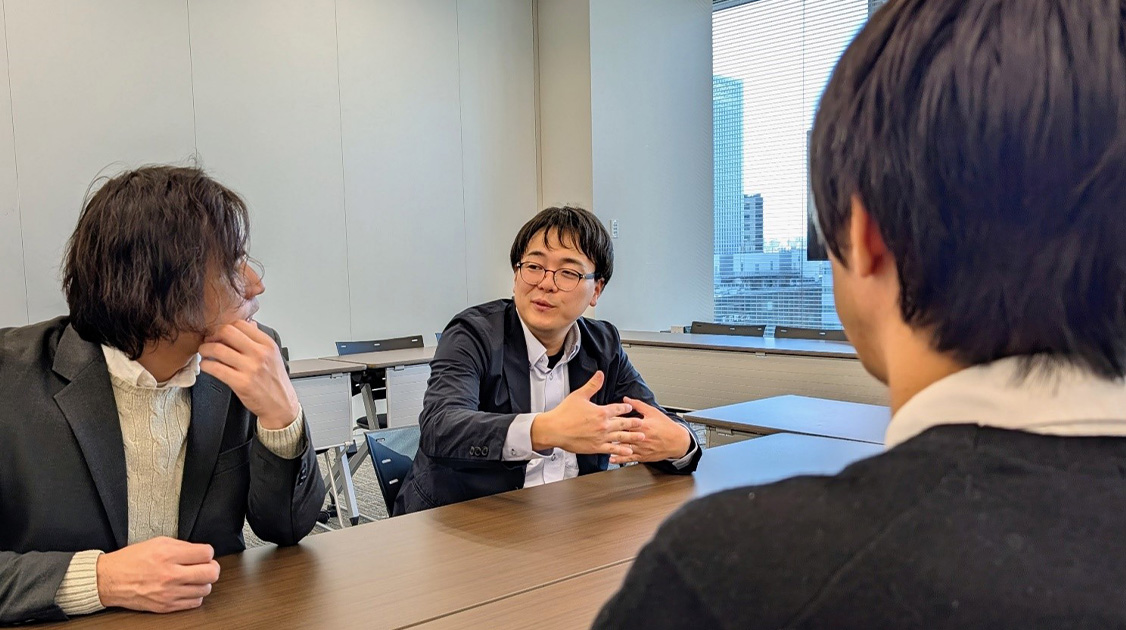
In Response to the Expectations of Mr. Matsumura and Dr. Maruyama
Nakata (KIOXIA): I feel that today’s AI was not designed under the assumption that data would be stored over the long term and effectively utilized. Through this joint creation, I hope we can pave a path that is completely different from these conventional approaches. Our goal is to create a world where there is value in the accumulation of data itself. I believe that unforeseen innovations will emerge from there. While keeping an eye on what kind of new businesses and applications will emerge in operations that utilize data, we would like to continue pursuing the unknown potential and value of “memory,” which the two of you have discussed.
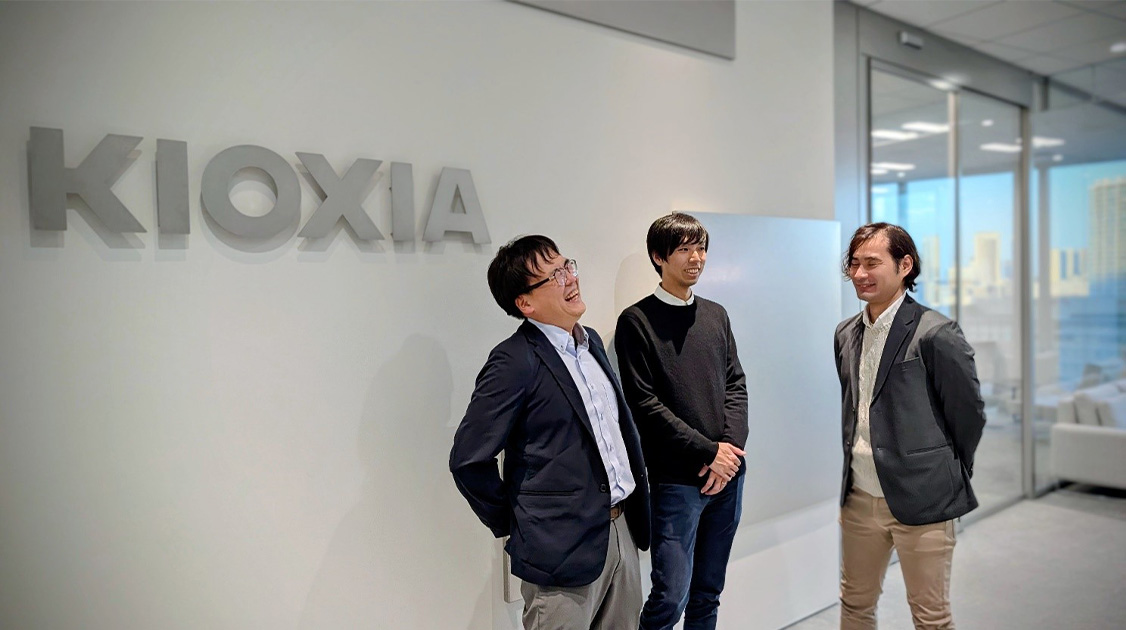
Interview Participants
TSUBAKIMOTO CHAIN CO.
Shota Matsumura (Deputy Manager, Advanced Technology Development Section, New Business & Product Development Department, Materials Handling Division)
EAGLYS Inc.
Yusuke Maruyama (Board Director and Chief Science Officer)
Kioxia Corporation
Kengo Nakata (Specialist, AI & DX Technology Research Group 3, AI & DX Technology Research Department)
The content and profile are current as of the time of the interview (January 2026).
- AI Temu Kanteishi is a trademark of Tsubakimoto Chain.
- KIOXIA AiSAQ is a trademark of KIOXIA.
- Other company, product, and service names may be used as trademarks by their respective owners.


