

Please select your location and preferred language where available.
BuzzCam: Ecological Monitoring Through Outdoor Acoustic and Environmental Sensing
Summary
The BuzzCam project, led by the MIT Media Lab in collaboration with Kioxia Corporation, has constructed a large-scale dataset of bumblebee buzzes based on extensive acoustic recordings collected in Patagonia. This dataset has been published in Nature Scientific Data. BuzzCam was also recognized as an honoree in Fast Company’s 2025 World Changing Ideas Awards. In this article, we provide an overview of BuzzCam and highlight the contents of the released dataset.
1. Background
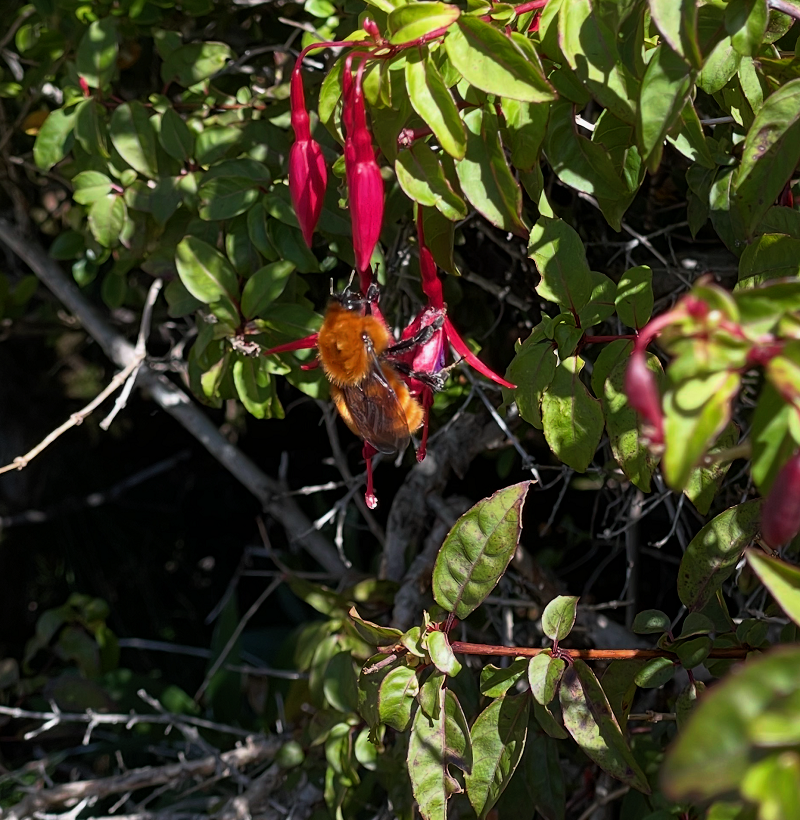
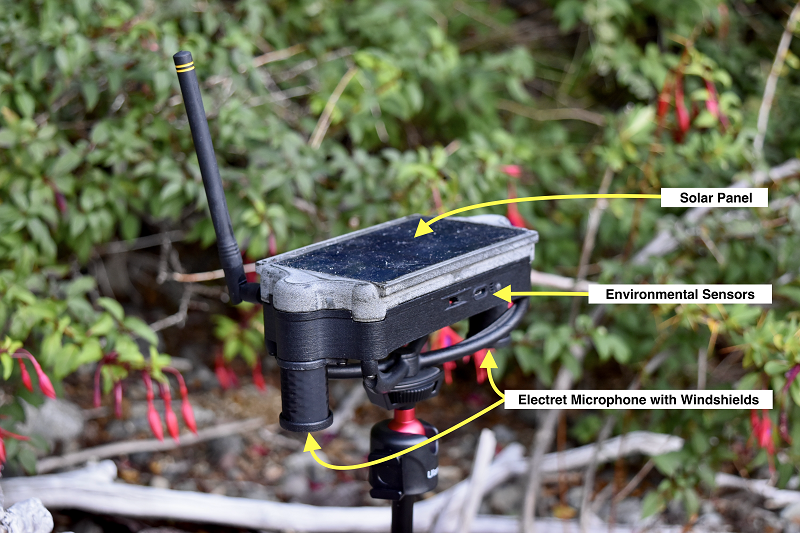
The native Patagonian bumblebee, Bombus dahlbomii (Figure 1), has undergone a population decline due to the expansion of invasive species and changes in its natural habitat, raising concerns about the impact on the surrounding ecosystem. In particular, competition with the invasive Bombus terrestris has intensified and become a major factor accelerating the decline of the native species. Traditional monitoring methods such as visual surveys and capture-based-techniques are labor intensive and make it difficult to conduct continuous, wide area observation. To address these challenges, BuzzCam (Figure 2) was developed as an outdoor passive acoustic monitoring (PAM) device. By autonomously recording bumblebee buzzes, surrounding soundscapes, and environmental parameters over long periods, BuzzCam provides a non-invasive foundation for tracking ecological changes without disturbing natural habitats.
2. Overview
BuzzCam is an outdoor acoustic device equipped with a microphone, battery, solar panel, and KIOXIA micro SD memory cards for stotage, designed to operate for extended periods even under harsh field conditions such as rain or direct sunlight.
It also integrates environmental sensors that measure temperature, humidity, atmospheric pressure, and gas concentrations, and records these on the same timeline as the acoustic data. This enables the creation of multimodal datasets that support analysis of the relationship between environmental conditions and the behaviors of the native Bombus dahlbomii and the invasive Bombus terrestris.
3. Bee Buzz Dataset Published in Nature Scientific Data
In 2025, the acoustic and environmental data collected in Puerto Blest, Argentina using BuzzCam were published as a dataset in Nature Scientific Data.
The dataset includes stereo acoustic recordings from 12 locations totaling approximately 250 hours, environmental sensor data such as temperature, humidity, atmospheric pressure, and gas concentrations recorded simultaneously, data from a nearby weather station, and metadata including native/invasive species labels.
4. Technical Validation: Quality Enhancement Using Amazon Mechanical Turk and AST
Real-time annotations collected in the field were found to include recordings that had labels but did not actually contain bee buzzes, due to factors such as distance and background noise.
To address this, 5,880 extracted 10-second clips were evaluated on Amazon Mechanical Turk, where three annotators judged whether each clip contained a bee buzz. This human validation step helped improve the reliability of the labels.
Additionally, automatic classification was performed at the one-second level using an Audio Spectrogram Transformer (AST) model trained on AudioSet. By combining the results from Amazon Mechanical Turk and AST to remove mislabeled samples, the final dataset consisted of 10,027 one-second snipetts containing bee buzzes and 11,719 snipetts without buzzes, providing a high-quality dataset for analysis.
5. Applications and Significance
The BuzzCam dataset is a multimodal ecological dataset that integrates acoustic, environmental, and metadata streams, enabling analyses of activity differences between native and invasive species as well as their relationships with environmental conditions. It can be used for a wide range of applications, from ecological conservation research to the development of bioacoustic machine learning models. Specific examples include:
- Monitoring the activities of the native Bombus dahlbomii and the invasive Bombus terrestris
- Analyzing the ecological impacts of invasive species
- Building multimodal machine learning models using combined acoustic and environmental data
- Building bioacoustic machine learning models, such as buzz detection and species classification
Scripts used for creating the dataset are also publicly available, allowing researchers to reproduce the workflow in full.
6. Conclusion
BuzzCam provides a passive acoustic monitoring framework that enables non-invasive analysis of ecological changes in natural environments by synchronously capturing acoustic and environmental information. The dataset published in Nature Scientific Data has been organized as a multimodal data resource that can be widely utilized across various research domains, including conservation of the endangered native species, assessment of the impacts of invasive species, and the development of machine learning models for ecological monitoring.
This work was published in Nature Scientific Data in March 2025.


